Pine and oak sit at opposite ends of the timber spectrum — one costs $5 a metre, the other costs $30. Both produce excellent furniture. The question isn’t which is better in an absolute sense; it’s which is right for where you are in your woodworking journey and what you’re building. Here’s an honest, direct comparison so you can make the right call before you spend a dollar on timber.
Pine vs Oak: Direct Comparison
| Characteristic | Pine | Oak |
|---|---|---|
| Cost (approx. AU$) | $4–$8 per lineal metre | $18–$35 per lineal metre |
| Janka Hardness | ~1,630 N (soft) | ~5,900 N (hard) |
| Workability (hand tools) | Excellent — planes and chisels easily | Moderate — requires sharp edges, more effort |
| Workability (power tools) | Excellent | Good — blunts blades faster |
| Stain-taking | Blotchy without pre-conditioner | Excellent — absorbs evenly, produces rich result |
| Clear finish result | Moderate — shows knots, grain variation | Outstanding — prominent ray figure, warm tone |
| Painted finish result | Very good (use BIN primer on knots) | Good (grain telegraphs through paint slightly) |
| Dent/scratch resistance | Low — soft wood marks easily | High — resists everyday wear well |
| Indoor furniture suitability | Very good | Excellent |
| Outdoor suitability | Poor (needs heavy sealant) | Moderate (still needs sealing; not best for outdoors) |
| Finishing requirements | Pre-conditioner or gel stain + topcoat | Oil, wax, or polyurethane — takes all finishes well |
| Beginner-friendliness | High | Moderate |
The Case for Pine
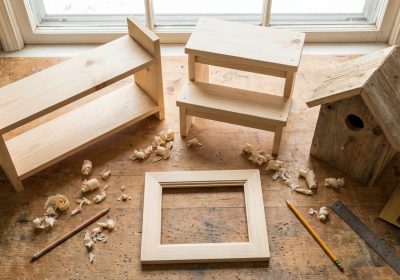
Pine is the best choice for beginners building their first pieces of furniture. It cuts, drills, sands, and finishes with minimal resistance. If you make a mistake — a bad cut, a chip, a sanding gouge — the material cost of starting again is low. A bookshelf built entirely from pine DAR costs about $40–$60 in timber; the same piece in oak would cost $200–$300.
Pine furniture can look genuinely excellent under the right finish. Painted pine, properly primed and topcoated, looks as good as anything you’d buy from a furniture store. Furniture-grade pine (knot-free) with a Danish oil finish or hardwax oil produces warm, rustic pieces that many people actively prefer to the sterile look of factory furniture.
Best pine furniture projects:
- Floating shelves and wall-mounted storage
- Bedside tables (painted)
- Simple coffee tables
- Toy boxes and storage benches
- Workbenches and shop furniture
- Kids’ furniture (softer = safer for little ones)
The Case for Oak
Oak produces furniture that lasts decades. The wood’s open grain structure takes oil and wax finishes beautifully, developing a rich patina over time that only improves with age. A well-built oak dining table, properly finished with Danish oil, will outlast its owner. That’s not something you can say about pine.
American white oak (the most common variety available in Australian timber yards) has prominent ray fleck figure — the subtle silver streaks that appear when the board is quarter-sawn. It’s one of the most beautiful natural materials in furniture. Under Rubio Monocoat or Osmo Polyx oil, it produces a result that looks like something from a boutique furniture studio.
Oak also holds screws better than pine, resists denting and scratching on tabletops, and doesn’t require as much finishing prep. The stain soaks in evenly across the grain without blotching.
Best oak furniture projects:
- Dining tables (the hardness is critical for long-term durability)
- Coffee tables with exposed surfaces
- Timber-frame beds
- Heirloom boxes and keepsake furniture
- Kitchen shelf brackets and pantry shelving
The Hardness Difference in Practice
Pine’s Janka hardness of approximately 1,630 N means it dents and scratches under normal household use — a dropped key will leave a mark. Oak’s 5,900 N rating means it resists those everyday impacts. For a dining table or kitchen work surface that takes real punishment, this matters significantly over a 10-year lifespan.
That said, pine softness also means it’s more forgiving for beginner tool handling. Tear-out and chip-out from a blade that’s not perfectly sharp is more recoverable in pine than oak. And a heavy handplane can remove millimetres of pine in a single pass — not so with oak, where you need sharp, properly set blades and more control.
Cost Over a Project Lifetime
For context: a simple four-shelf bookcase built from 90×19mm pine uses approximately 10–12 lineal metres of timber. At Bunnings prices, that’s $50–$70 in timber. The equivalent in oak would cost $200–$300+ and require premium hardwood sources, not Bunnings.
For first furniture builds, the economics of pine are hard to argue with. Once you’ve built a bookcase, a coffee table, and a bed frame in pine, you’ll understand joinery, finishing, and grain management well enough to buy oak with confidence — and the higher cost of the material will be justified by the quality of build you now know how to achieve.
The Honest Answer
Build your first three furniture projects in pine. Learn your tools, learn how to cut accurately, learn how to finish well. Then build your fourth project in oak. You’ll produce something genuinely beautiful — and you won’t have wasted expensive timber learning lessons that pine could have taught you for a fraction of the price.
Get the Plans to Match the Wood
Whether you’re starting with pine or ready for oak, the difference between a great project and a frustrating one is having a proper plan with accurate cut lists and step-by-step assembly instructions. Ted’s Woodworking covers both beginner pine projects and more advanced hardwood furniture with the detail beginners need to get it right the first time.