The roof is the most weather-critical part of any shed, and the style you choose has a bigger impact on your build than almost any other decision. The roof shape determines how much storage height you have inside, how complex the framing is, how well it sheds Australian rain, and what the structure looks like from the street. There are four main roof styles for backyard sheds — gable, lean-to (skillion), gambrel, and saltbox — and each one suits different situations. This guide explains how each works, how to calculate rafter lengths, and which cladding products perform best in Australia.
Shed Roof Styles Compared
| Style | Pitch Range | Main Materials Needed | Build Difficulty | Best For |
|---|---|---|---|---|
| Gable | 15°–35° | Ridge board, rafters, collar ties | Easy | General storage sheds; most common AU choice |
| Lean-To (Skillion) | 5°–20° | Rafters only (no ridge) | Very Easy | Attached sheds; lean-to garages; carports |
| Gambrel | Lower: 20–25°; Upper: 45–60° | Dual-pitch rafters, knee wall, ridge board | Moderate | Maximum loft storage; barn-style aesthetics |
| Saltbox | Asymmetric: 35°+ front; 20°+ rear | Offset ridge, two rafter lengths | Moderate | Sheds attached to slopes; distinctive look |
Gable Roof
The gable roof is the A-frame shape that appears on most backyard sheds in Australia. Two roof planes slope away from a central ridge board, with triangular gable ends filled in with framing and cladding. It’s the default choice for most DIY shed builders because the geometry is simple, every rafter is the same length, and the framing goes up quickly.
Gable Rafter Length Calculation
To find the rafter length for a gable roof, use the half-span and the roof pitch. The formula is:
Rafter length = half-span ÷ cos(pitch angle)
For a 3.0m-wide shed (1.5m half-span) with a 22° pitch: 1.5 ÷ cos(22°) = 1.5 ÷ 0.927 = 1.618m. Add your eave overhang (typically 300–450mm) to get total rafter length. Always add 50mm for the bird’s mouth cut at the top plate.
When to Use It
Gable roofs are the best all-around choice for freestanding sheds in any Australian climate zone. They’re easy to build, easy to reroof, and well understood by any builder or council officer assessing your plans.
Lean-To (Skillion) Roof
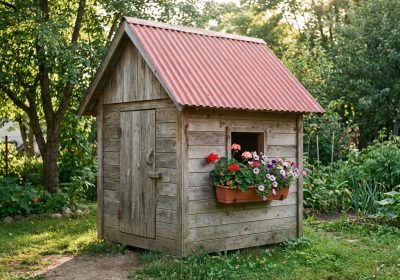
A lean-to or skillion roof is a single sloping plane — one end is higher than the other, and there’s no ridge. The highest wall is built taller, the rafters run from the high wall to the low wall, and the slope creates both pitch and drainage in a single straight run.
Best Application
The lean-to is almost ideal when you’re attaching a new shed or covered area to an existing structure — a house wall, a fence, or an existing shed. The high wall of the lean-to can be attached directly to the existing structure using a ledger board, eliminating one wall of framing entirely. This saves materials and dramatically simplifies the build.
Lean-To Rafter Length Calculation
Rafter length = shed depth ÷ cos(pitch angle). For a 2.4m-deep lean-to at 10°: 2.4 ÷ cos(10°) = 2.4 ÷ 0.985 = 2.437m plus eave overhang. Simple and fast to calculate.
Minimum Pitch
For corrugated steel roofing on a lean-to in Australia, the manufacturer minimum is 5° but 10° is recommended for good drainage. In high-rainfall areas or if leaves collect on the roof, use 15° minimum.
Gambrel Roof
The gambrel roof — the classic barn shape — uses two pitches on each side. The lower section has a steep pitch (typically 45–60°), and the upper section has a shallower pitch (around 20–25°). The result is a roof that rises steeply from the eaves, then flattens near the ridge, creating dramatically more headroom and volume inside the roof space compared to a standard gable.
Why Choose Gambrel
If maximum loft storage is your goal, gambrel is the right choice. The steep lower pitch means the loft floor can extend much further towards the walls than it could under a standard gable roof. In a 12×16 shed, a gambrel roof can create a full-height (1.8m+) loft over most of the floor area. The trade-off is complexity: four different rafter lengths, knee wall framing, and the geometry requires more careful calculation.
Gambrel Rafter Calculation
The gambrel is split at the knee wall. Calculate each pair of rafter sections separately using the same formula as gable (half-span ÷ cos(pitch)). The knee wall height determines where the break occurs — typically at 60–65% of the total roof height for optimal loft volume.
Saltbox Roof
A saltbox roof is a gable roof with an offset ridge — the ridge is shifted towards one end of the building, creating two roof slopes of different length and pitch. The rear slope is longer and shallower; the front slope is shorter and steeper. The result is an asymmetric, characterful profile that looks genuinely interesting in a suburban backyard.
Best Application
Saltbox is a good choice when you need additional covered space on the rear of the shed (the longer rear slope creates a covered lean-to zone) without building a fully separate structure. It’s also useful on sloping sites where a symmetric roof would look odd.
Saltbox Rafter Calculation
Calculate each slope separately. The front rafters use a shorter run (the distance from the ridge to the front wall), and the rear rafters use a longer run (the ridge to the rear wall). The ridge height is the same for both — determine the ridge height first, then calculate each rafter run from that point.
Roof Cladding Options in Australia
Colorbond Steel
The premium standard for Australian residential construction. Colorbond (Zincalume steel with a Thermatech-coated paint finish) is available in 22 standard colours and three profiles — Trimdek (low rib), Custom Orb (corrugated), and Klip-Lok (concealed fix). It’s more expensive than raw corrugated galvanised iron but significantly more attractive, longer lasting, and accepted by councils in residential streetscape zones. Minimum pitch 5° (Trimdek) or 3° (Klip-Lok).
Corrugated Galvanised Iron (CGI)
The budget choice. 0.42mm BMT standard corrugated sheets are available at Bunnings and most rural and independent hardware stores. They lack the painted finish of Colorbond but are otherwise equally durable for covered areas. Best for sheds in rural, industrial, or rear-of-property locations where aesthetics matter less. Minimum pitch 5°.
Asphalt or Fibreglass Shingles
Used more in the US but available in Australia. Requires a solid plywood deck and sarking underlayment. Works well aesthetically on a gable or saltbox roof with a timber-framed outbuilding that needs to match a Queenslander or Federation-style house. Minimum pitch 18°. More expensive to install than steel; lifespan in harsh Australian sun is lower unless using a quality fibreglass product.
Plan Your Roof Before You Buy Materials
Rafter length calculations above are a guide — your actual cut list depends on precise measurements from a completed floor plan, including the exact wall heights, ridge board position, and eave overhang specification. Building from a detailed plan means you buy the right amount of timber, cut it right the first time, and don’t end up with a sagging roofline because a rafter was cut 50mm short.
Ted’s Woodworking includes detailed shed roof framing plans for every style covered here — gable, gambrel, lean-to, and more — with precise cut lists for Australian standard timber dimensions.
Browse shed roof plans and 16,000+ woodworking projects at Ted’s Woodworking →