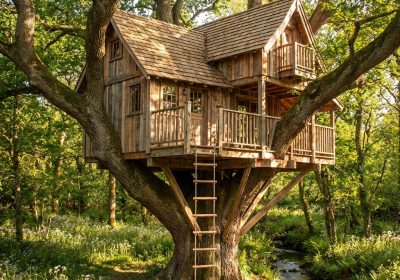
Adding a slide to a backyard playhouse transforms it from a simple cubby into the kind of structure kids will use every single day until they’re teenagers. The good news is that whether you’re building a new playhouse from scratch or retrofitting a slide onto an existing platform, the process is straightforward and the materials are widely available in Australia. The key decisions — platform height, slide angle, and surface material — determine whether the slide is genuinely fun or just decorative, so let’s cover them properly before we get into the build.
Platform Height and Slide Angle
For a backyard slide used by children aged 4–8, the platform height should be between 1.2m and 1.5m above ground. Below 1.2m, the slide is too short to build any satisfying speed. Above 1.5m, you’re creating a fall risk and entering permit territory in most Australian councils.
The slide angle should be 35–40 degrees for this height range. At 35–40°, a child generates enough speed to feel the slide without launching off the end. Steeper than 40° and the exit speed becomes hard to control; shallower than 35° and the child barely moves. Here’s how to calculate the slide length once you’ve confirmed platform height and angle:
- Platform height 1.2m, angle 37°: slide run length = 1.2 / sin(37°) ≈ 2.0m
- Platform height 1.5m, angle 37°: slide run length = 1.5 / sin(37°) ≈ 2.5m
A 2.0–2.5m slide is the standard length for a residential playhouse slide in Australia, and pre-made slide panels are typically available in these lengths.
Choosing a Slide Surface: Stainless Steel vs Plastic Panel
You have two main options for the actual sliding surface:
Polished stainless steel panel: This is the gold standard for longevity and performance. A pre-made stainless steel slide panel (typically 400–500mm wide × 2000–2500mm long) costs approximately $180–$250 from playground equipment suppliers in Australia. Search for “stainless steel slide panel playground AU” — suppliers like Playground Centre and Moduplay ship nationally. Stainless steel is fast, self-cleaning, virtually indestructible, and looks commercial-grade. It does get hot in direct afternoon sun — orient the slide to face south or east, or build a simple shade roof over the top third.
HDPE plastic slide panel: High-density polyethylene slide panels are lighter, don’t heat up as much in sun, and are available in bright colours. They’re slightly slower than stainless, which can be a positive for younger children. Cost is similar ($150–$220). HDPE can crack if struck hard in cold weather, but in the Australian climate this is rarely an issue. Available from the same playground suppliers as stainless panels.
What not to use: Do not make a slide from regular plywood, even sanded and sealed. It warps, splinters, and becomes dangerously rough within one season. Do not use aluminium — it oxidises and creates a rough surface that tears clothing and causes friction burns.
Cut List: Slide Frame Timber
These dimensions are for a slide with a 1.5m platform height and a 37° angle, resulting in approximately a 2.5m run length. Adjust proportionally for different heights.
| Part | Qty | Length | Section | Material | Notes |
|---|---|---|---|---|---|
| Side rails | 2 | 2550mm | 90×45mm | H3 treated pine | Cut top end at 37° for platform connection |
| Cross braces | 4 | 520mm | 90×45mm | H3 treated pine | Evenly spaced along the run |
| Slide panel support ledgers | 2 | 2550mm | 45×19mm | H3 treated pine | Screwed inside face of side rails to support panel edges |
| Top flange plate | 1 | 520mm | 90×45mm | H3 treated pine | Sits against platform framing at top of slide |
| Bottom landing plate | 1 | 520mm | 90×45mm | H3 treated pine | Angled to sit flat on ground at run-out |
Step-by-Step Build Instructions
- Confirm platform height and calculate angles. Measure your platform height precisely. Calculate the slide run length using the formula above (height / sin 37° for a 37° angle). Mark the angle cut on the top end of each side rail — this is the cut that will sit against the platform framing.
- Cut the side rails. Cut both side rails to length and angle-cut the top end at 37°. The bottom end can be cut flat or at a slight angle to sit flush on the ground — a 5° cut at the bottom gives a cleaner land.
- Attach the support ledgers. Screw the 45×19mm ledger strips along the inside face of each side rail, positioned so the slide panel will rest in the channel formed between the ledger and the top face of the rail. The panel should sit 20–25mm below the top edge of the side rails — this creates the side walls that stop a child sliding off the side.
- Install the cross braces. Space four cross braces evenly along the underside of the frame, connecting the two side rails. These are the structural ribs that prevent the frame racking. Use two 75mm screws per end, pre-drilled to avoid splitting.
- Attach the frame to the platform. The top flange plate bolts to the platform framing using 10mm coach bolts. This connection takes the full load of the slide and any child using it — use a minimum of four coach bolts, two on each side. The side rails then connect to the flange plate. This is a structural connection; do not rely on screws alone.
- Install the slide panel. Lower the slide panel into the channel formed by the side rails and ledgers. The panel should sit snugly and be secured at the top with two stainless steel screws through pre-drilled holes in the panel flange (most commercial panels have a bolt flange at the top). Do not over-constrain the panel at the bottom — allow it to be free at the exit so it can flex slightly rather than creating a pressure point.
- Anchor the base to the ground. Drive two star pickets or concrete stakes alongside the bottom of the frame and secure with coach bolts, or pour two small concrete pads and anchor the base plate down. The slide frame must not be able to shift sideways or forward when a child exits at speed.
- Install handrails at the top. This is non-negotiable. The top of the slide where a child sits to launch must have handrails or a raised side wall of at least 400mm above the seating surface. Most commercial slide panels include a raised top section for this purpose. If building a custom entry, add timber rails at 400mm above seat height.
- Check the landing zone. The area immediately at the base of the slide for at least 1.5m must have a soft landing surface — bark chip, rubber matting, or thick lawn. Do not allow concrete, paving, or hard-packed dirt directly at the slide exit.
- Test before first use. Have an adult test the slide at full weight. Check the frame for flex or any sign of movement at the platform connection. Check that the panel sits flat with no raised edges or burrs.
Retrofitting a Slide to an Existing Playhouse
If you’re adding a slide to an existing platform rather than building from scratch, the process is essentially the same from Step 5 onward. The key check is whether the existing platform framing is strong enough to take the bolt-through connection. The attachment point will experience both the weight of a child on the slide plus lateral force as the child pushes against the rails at the top. If the platform framing is 90×45mm or heavier, it will typically handle this load. If the existing platform framing is lighter, add a doubled-up header beam at the attachment point before bolting the slide on.
Build More — Play More
Once the slide is done, the natural next project is a swing set, climbing wall, or sandpit to complete a full backyard play zone. Ted’s Woodworking has detailed plans for all of these, along with hundreds of other outdoor timber projects designed for Australian conditions. Over 16,000 plans in one library — the best resource available for backyard builders.